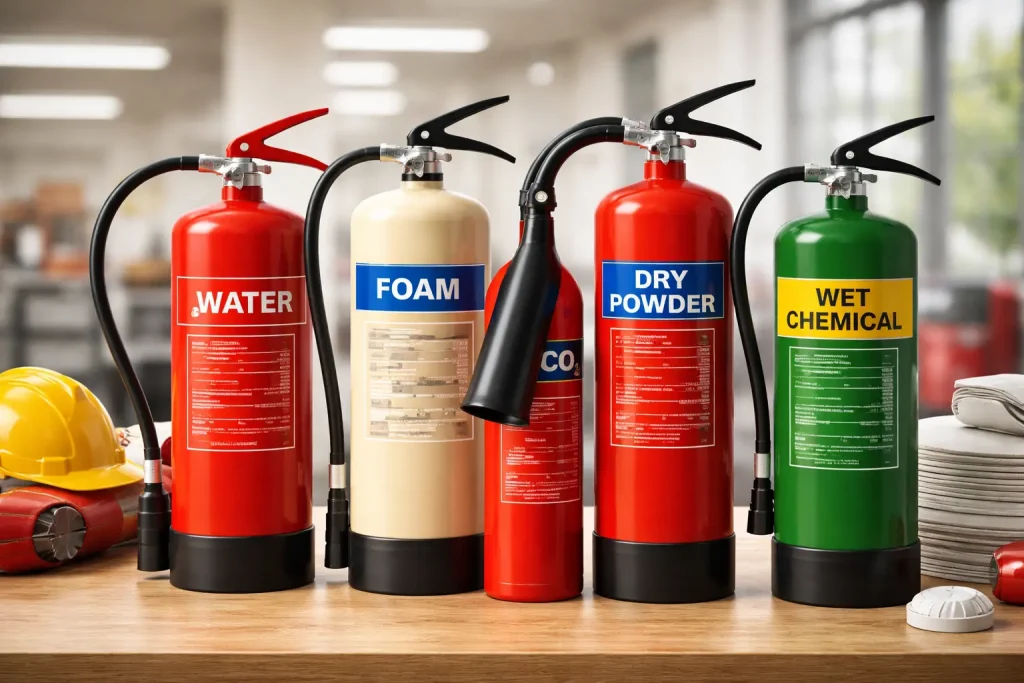
Fires do not all behave in the same way. A small kitchen fire is very different from an electrical fire in an office. That is why there are different types of fire extinguishers, each designed for a specific risk. Using the wrong one can make the situation worse.
In this guide, we explain the main fire extinguisher types and uses. We also show you how to choose the right one for your home or workplace, so you feel confident in case an emergency happens.
Why understanding fire extinguishers matters
Many people install extinguishers but are not sure when or how to use them. This can lead to hesitation or unsafe decisions during a fire.
If you understand the basics:
- You respond faster
- You reduce risk to people and property
- You stay compliant with UK fire safety guidance
Fire safety is not only about equipment. It is about knowing what to do with it.
Fire classes explained
Before choosing an extinguisher, we need to understand fire classes. These describe what is burning.
- Class A – Wood, paper, textiles
- Class B – Flammable liquids like petrol or paint
- Class C – Flammable gases
- Class D – Metals
- Electrical fires – Equipment under power
- Class F – Cooking oils and fats
Each extinguisher is built to handle specific classes. There is no single extinguisher that safely handles everything.
The main types of fire extinguishers
1. Water extinguishers (Red label)
These are the most common and are often found in offices and public buildings.
Best for:
Class A fires such as wood, paper, and fabric
Avoid using on:
Electrical equipment or kitchen fires
How it works:
It cools the burning material and removes heat
This is usually the first line of defence in low-risk environments.
2. Foam extinguishers (Cream label)
Foam extinguishers are slightly more versatile than water.
Best for:
Class A and Class B fires
Avoid using on:
Cooking oils or electrical fires
How it works:
It forms a layer over the fire, cutting off oxygen
They are commonly used in offices, warehouses, and places where liquids are stored.
3. CO2 extinguishers (Black label)
These are essential where electrical equipment is present.
Best for:
Electrical fires and flammable liquids
Avoid using on:
Solid materials like paper or wood
How it works:
It removes oxygen and suffocates the fire
If you are wondering which fire extinguisher to use for electrical fires, this is usually the safest choice.
4. Dry powder extinguishers (Blue label)
Often called ABC extinguishers, these cover multiple fire types.
Best for:
Class A, B, and C fires
Avoid using in:
Small indoor spaces due to inhalation risk
How it works:
It creates a barrier between the fire and oxygen
They are powerful but can create visibility issues indoors, which is why they are less common in offices.
5. Wet chemical extinguishers (Yellow label)
These are designed specifically for kitchens.
Best for:
Class F fires (cooking oils and fats)
Avoid using on:
Electrical or gas fires
How it works:
It cools the fire and creates a sealing layer over the hot oil
If you run a commercial kitchen, this is essential equipment.
Fire extinguisher colour codes (UK guide)
In the UK, all extinguishers are red with a coloured label:
- Red – Water
- Cream – Foam
- Blue – Dry powder
- Black – CO2
- Yellow – Wet chemical
These colour codes help you quickly identify the right extinguisher during an emergency.
How to choose the right fire extinguisher
Choosing the right extinguisher depends on your environment.
For homes
- Water or foam for general use
- Wet chemical for kitchens
- CO2 for electrical areas
For offices
- Water or foam for general areas
- CO2 near electrical equipment
For industrial settings
- Dry powder for mixed risks
- Specialist extinguishers for metals or gases
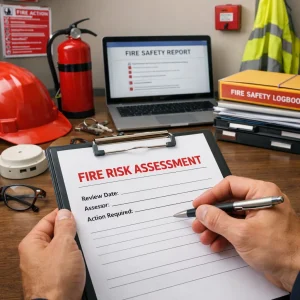
If you are unsure, a professional fire risk assessment is always the safest route.
Simple example (real-life scenario)
Imagine a small office kitchen fire caused by oil overheating.
Using water would spread the fire and make it dangerous.
Using a wet chemical extinguisher would safely cool and control it.
Now consider a server room fire.
Using water would risk electrocution and damage equipment.
A CO2 extinguisher would put it out safely without residue.
This is why choosing the right extinguisher matters.
How to use a fire extinguisher (PASS method)
Even the right extinguisher is useless if used incorrectly.
- Pull the pin
- Aim at the base of the fire
- Squeeze the handle
- Sweep side to side
Only tackle small fires. If the fire grows or blocks your exit, leave immediately.
Common mistakes to avoid
Many people make simple but risky errors:
- Using water on electrical or oil fires
- Choosing one extinguisher for all risks
- Not servicing equipment regularly
- Blocking access to extinguishers
Fire safety works best when everything is planned and maintained.
Fire extinguishers vs other fire safety measures
Extinguishers are only one part of a complete fire safety setup.
You also need:
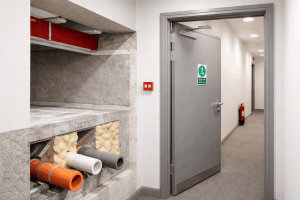
- Proper compartmentation
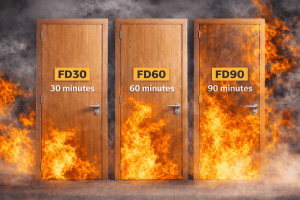
- Fire doors
- Regular inspections
For example, our fire door installation service helps stop fire spreading between rooms. Regular fire door maintenance ensures they work when needed.
We also support full building protection through fire compartmentation services, which play a critical role alongside extinguishers.
Final thoughts
Fire safety is about preparation, not reaction. Understanding fire extinguisher types and uses gives you a clear advantage in an emergency.
At Original Fire, we do more than supply equipment. We help you build a complete fire protection strategy, from extinguishers to passive fire protection and compliance support. Our team ensures your building is safe, compliant, and ready for real-world risks.
If you want expert advice or a tailored solution, we are here to help.