
Fire safety can seem confusing, but many things are actually easy to understand when they’re explained clearly. One of the most important things is fire compartmentation. If you’ve ever wondered what fire compartmentation is and why it matters, this guide will walk you through it clearly and practically.
We work with buildings every day, and we see how good compartmentation protects lives, limits damage and keeps people compliant with fire safety laws.
Fire compartmentation explained in plain terms
The fire compartmentation definition is straightforward. It means dividing a building into smaller sections that can resist fire and smoke for a set period of time.
Each section is designed to slow the spread of fire. This gives people more time to escape and gives the fire service more time to respond.
When we talk about fire compartmentation in buildings, we’re referring to how walls, floors, doors, and hidden spaces work together to contain a fire where it starts.
The purpose and importance of fire compartmentation
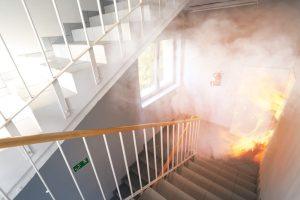
The purpose of fire compartmentation is to control how fire and smoke move through a building. It does not stop fires from starting, but it stops them from spreading quickly.
The importance of fire compartmentation comes down to three things:
- It protects lives by keeping escape routes usable
- It reduces damage to property and critical areas
- It supports safer working conditions for firefighters
Without proper compartmentation, fire and smoke can travel rapidly through voids, ceilings, and service openings.
How is fire compartmentation achieved?
Good compartmentation relies on passive fire protection, which means systems that work without power or human action.
Fire-resisting walls and floors
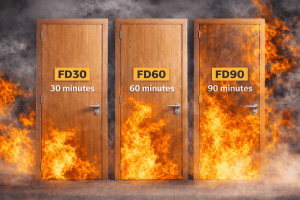
Fire-resisting walls and floors are the main parts of compartmentation. They are designed to stop fire and smoke from spreading for a set of time, usually 30, 60, or 120 minutes.
These barriers must remain intact. Even small gaps can cause failure.
Fire doors and fire-stopping
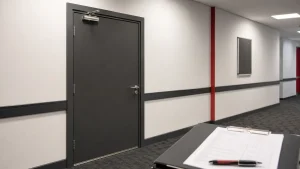
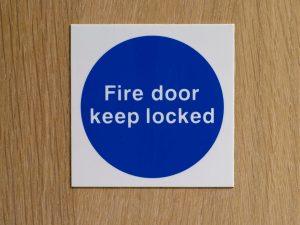
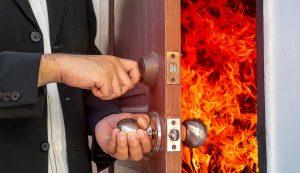
Fire doors and fire-stopping are critical where openings are needed. A fire door should close properly and seal the compartment line.
If you want to understand this in more detail, our guides on fire door installation and maintenance explain what compliant doors should achieve and how they are kept effective.
Cavity barriers in fire compartmentation
Hidden spaces are often the biggest risk. Cavity barriers in fire compartmentation close off concealed voids in walls, floors, and roofs.
Without them, fire can spread unseen and bypass the main compartment walls entirely.
Fire compartmentation examples in real buildings
We see fire compartmentation examples every day across different building types.
In blocks of flats, each flat usually forms its own compartment. This supports a stay-put strategy and prevents one fire from affecting the whole building.
In commercial buildings, compartments often separate offices, plant rooms, stairwells, and storage areas.
In healthcare settings, compartments allow people to move horizontally away from danger without full evacuation.
Fire compartmentation regulations and requirements
Fire compartmentation regulations in the UK are set out mainly in Approved Document B. These rules define fire compartmentation requirements such as:
- How long walls and floors must resist fire
- Where compartments must be installed
- How different building uses affect the design
Because every building is different, fire compartmentation design should always be planned early and reviewed regularly.
Surveys, inspection, and ongoing maintenance
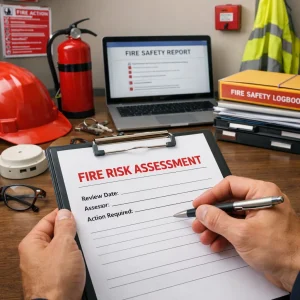
Even well-designed systems can fail if they’re damaged or altered. That’s why a fire compartment survey is so important.
We often find problems caused by work done later, such as adding new cables, pipes, or making changes to the ceiling.
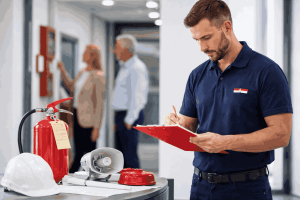
Regular fire compartmentation inspection and maintenance help identify breaches before they become serious risks. It also supports legal compliance and safer occupancy.
How Original Fire can help?
At Original Fire, we specialise in keeping buildings safe by using practical and fully compliant passive fire protection solutions. Our work covers everything from inspections to full remediation.
We provide dedicated fire compartmentation services and also support complex projects such as Facade Recladding Compartmentation.
Our team also provides fire door services across Essex. This includes fire doors in Basildon, Chelmsford, and Southend-on-Sea. We also offer wider passive fire protection support in nearby areas such as Colchester and Braintree.
If you’re unsure about the condition of your building or need expert advice, speak to us today.