Fire safety is not something that should be treated as a one-time task. Buildings change, workplaces evolve, and new risks appear over time. That is why many business owners ask a very practical question: how often should a fire risk assessment be reviewed?
In the UK, having a fire risk assessment is a legal requirement for most non-domestic premises. However, keeping that assessment up to date is just as important as completing the initial review.
In this guide, we explain the frequency of fire risk assessments, when a review is required, and what businesses and landlords need to know to remain compliant and ensure the safety of people.
What Is a Fire Risk Assessment?
Before looking at review timelines, it helps to understand what a fire risk assessment actually involves.
A fire risk assessment is a structured inspection of a building that identifies potential fire hazards, evaluates the level of risk, and outlines actions needed to reduce those risks. The goal is simple: protect people, property, and business operations from the danger of fire.
Fire risk assessments are required under the Regulatory Reform (Fire Safety) Order 2005. The law places responsibility on the “Responsible Person”. This is usually the employer, building owner, landlord or managing agent.
During an assessment, several areas are reviewed, including:
- Possible ignition sources
- Materials that could fuel a fire
- Escape routes and evacuation procedures
- Fire detection and alarm systems
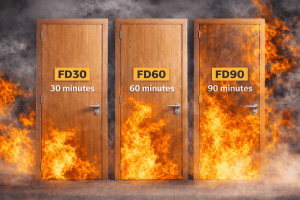
- Passive protection, such as compartmentation and fire doors
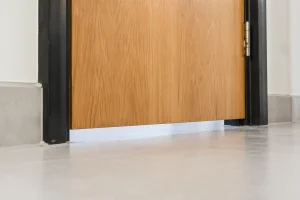
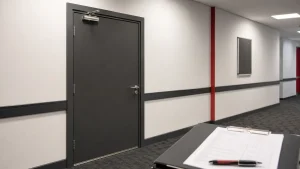
For example, properly installed fire doors are a critical safety feature. Businesses often rely on professional fire door installation and ongoing fire door maintenance to ensure these systems work correctly during an emergency.
A well-conducted assessment provides clear recommendations, so building owners know exactly what improvements are required.
How Often Should a Fire Risk Assessment Be Reviewed in the UK?
There is no fixed timeframe written directly into UK legislation. However, the law does require the responsible person to review the assessment regularly and keep it up to date.
In practice, most safety professionals follow these widely accepted guidelines.
Annual review
A fire risk assessment should normally be reviewed at least once every 12 months.
This annual review checks whether the original findings are still accurate and confirms that safety measures remain effective.
Even if nothing obvious has changed, a yearly review demonstrates that the responsible person is actively managing fire safety.
Full reassessment every 3 to 5 years
Many organisations choose to carry out a complete new assessment every three to five years.
This deeper review looks at the entire building again rather than simply updating the previous report. Larger or more complex buildings may require more frequent reassessment.
Immediate review after major changes
Sometimes a fire risk assessment must be updated immediately rather than waiting for the next annual review.
A reassessment is required when something significant changes in the building or its use.
When Should a Fire Risk Assessment Be Updated?
Certain situations automatically trigger the need for a review. These changes can alter the fire risk profile of a building and must be addressed quickly.
A fire risk assessment should be reviewed if:
The building layout changes
Renovations, new partitions, or extensions can affect escape routes and fire compartmentation.
The purpose of the building changes
For example, converting an office into residential accommodation or introducing new industrial equipment.
Occupancy levels increase
More people in the building may require different evacuation strategies.
Fire safety systems are modified
Upgrades to alarms, sprinklers or structural fire protection should be documented in the assessment.
A fire or near-miss incident occurs
Any fire-related event must trigger an immediate review.
Fire Risk Assessment Review Requirements for Businesses
For UK businesses, keeping fire safety documentation up to date is both a legal responsibility and a practical safety measure.
The responsible person must ensure that:
- A suitable and sufficient fire risk assessment exists
- The assessment is recorded and documented
- Identified risks are addressed
- Reviews are completed regularly
Failure to meet these obligations can result in enforcement action, fines, or even prosecution.
Beyond legal compliance, regular reviews help businesses identify safety gaps early. Something as simple as a damaged fire door or blocked escape route can significantly increase risk if left unnoticed.
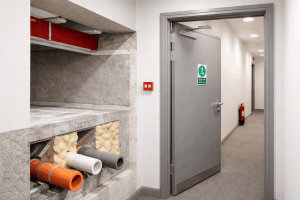
Professional inspections often include checking passive fire protection elements such as structural barriers and sealed penetrations. In larger commercial buildings, solutions like passive fire protection play an essential role in controlling fire spread.
How Often Should Landlords Review Fire Risk Assessments?
Landlords have specific responsibilities when it comes to fire safety, particularly in blocks of flats or properties with shared areas.
In these buildings, fire risk assessments must cover:
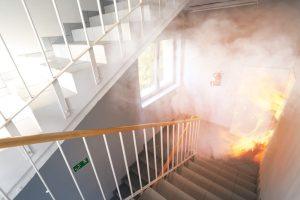
- Communal corridors and staircases
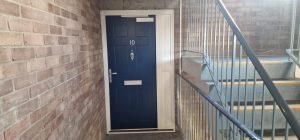
- Entrance doors to flats
- External wall systems
- Escape routes
As with commercial premises, annual reviews are recommended, with immediate updates required if the building changes or safety concerns arise.
Example: How Fire Risk Assessment Reviews Work in Practice
To make this clearer, consider a simple example.
A small office building completes its first fire risk assessment in 2023. The report identifies a few improvements, such as installing better fire signage and servicing emergency lighting.
In 2024, the business carries out its annual review. The assessor confirms that the recommendations were implemented and that the building layout remains the same.
In 2026, the company will renovate part of the building and add new meeting rooms. Because the layout has changed, the fire risk assessment must be reviewed immediately, rather than waiting for the next annual check.
This process ensures that the safety plan always reflects the building’s real conditions.
Common Mistakes Businesses Make with Fire Risk Assessments
Despite the legal requirements, many organisations still make avoidable mistakes.
One common issue is treating the assessment as a one-off document rather than a living safety record. Fire risks evolve, and ignoring updates can quickly make an assessment outdated.
Another mistake is failing to record changes properly. Even small alterations to the workplace should be reflected in the documentation.
Businesses also sometimes overlook structural protection measures. Systems like compartmentation and façade safety play a major role in containing fire spread, which is why services such as facade recladding compartmentation may be required during building upgrades.
Finally, some organisations rely on unqualified assessors. Choosing professionals with proper certification and qualification helps ensure the assessment meets legal standards.
How We Help Businesses Stay Compliant
Keeping a fire risk assessment current can feel complicated, especially when buildings change or regulations evolve. That is where professional guidance becomes valuable.
At Original Fire, we help businesses across the UK maintain safe and compliant buildings through specialist passive fire protection services. Our work includes fire door installation, ongoing maintenance, compartmentation systems, and structural fire protection solutions designed to slow the spread of fire and protect escape routes.
Whether you are reviewing an existing fire risk assessment or upgrading your building fire protection systems, our experienced team can help you identify the right solution.
Contact us today to discuss your fire safety requirements and ensure your property remains protected and compliant.