Fire door gaps are one of the most misunderstood parts of fire safety. They look small, but they play a critical role in stopping the spread of fire and smoke. If the gaps are wrong, the door may not protect people or property when it matters most.
In this guide, we explain fire door gap regulations in simple terms. We cover the correct gap sizes, how to measure them, common mistakes, and what you should do if your doors are not compliant.
What are fire door gap requirements?
Fire door gap requirements refer to the space between the door and its frame, as well as the gap at the bottom of the door.
These gaps are not accidental. They are carefully designed to:
- Allow the door to open and close properly
- Enable intumescent seals to expand during a fire
- Control the movement of smoke and heat
If the gap is too large, fire and smoke can pass through. If it is too tight, the door may not close fully.
Why do correct fire door gaps matter?
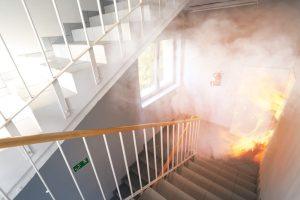
Fire doors are part of a wider passive fire protection system. Their main job is to contain fire within one area and slow its spread.
Incorrect gaps can lead to:
- Smoke can leak into escape routes
- Fire can spread faster between rooms
- Failed fire safety inspections
- Legal risk for building owners or responsible persons
This is why fire door compliance in the UK is taken seriously, especially in commercial and residential buildings. UK fire door compliance is commonly assessed alongside standards and guidance such as BS 8214, BS 476, BS EN 1634, Approved Document B, and the Regulatory Reform (Fire Safety) Order 2005. These regulations help ensure fire doors perform correctly during a fire.
What is the correct gap around a fire door?
Understanding the correct fire door gap size is essential.
Side and top gap (fire door side gap size)
In most UK fire door systems, the recommended gap between the fire door and frame is typically:
- Minimum: 2mm
- Maximum: 4mm
- Ideal: Around 3mm
This ensures the door can close properly while still forming a seal during a fire. Exact requirements may vary depending on the manufacturer, certification, fire door system, and whether smoke seals are fitted, so manufacturer guidance should always be followed.
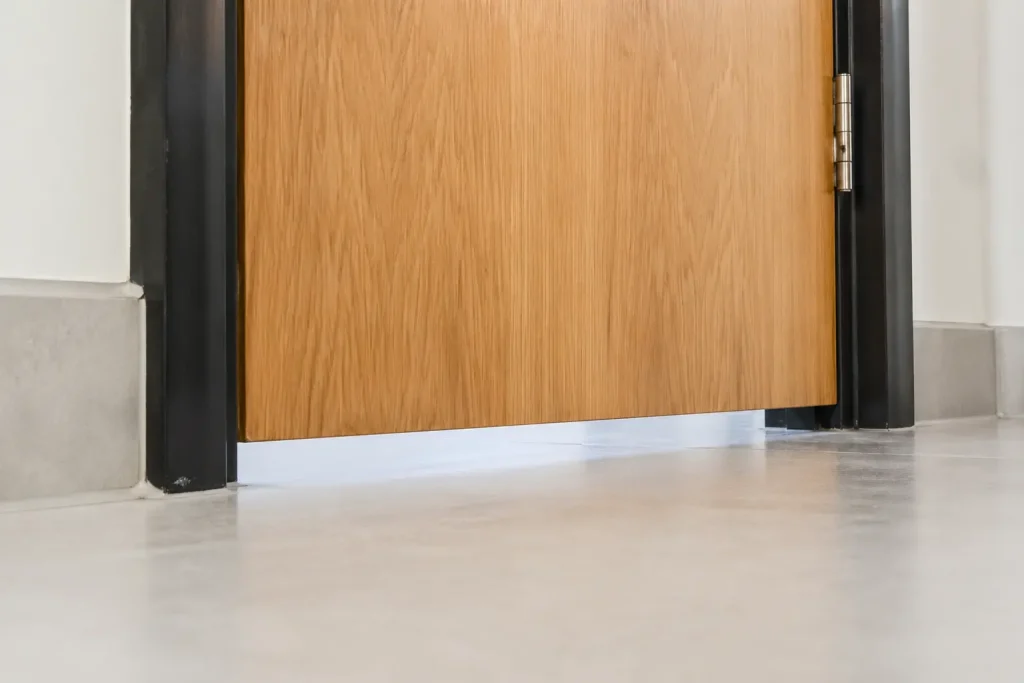
Gap under the fire door (UK regulations)
The gap at the bottom depends on the type of protection required:
- Standard fire door: 8mm to 10mm
- With smoke control: Maximum 3mm
This answers one of the most common questions:
What is the correct gap under a fire door in the UK?
It depends on whether smoke seals are required.
Should a fire door have a gap at the bottom?
Yes, a fire door should have a gap at the bottom.
This allows:
- Smooth opening and closing
- Air movement where required
However, the gap must stay within approved limits. If it is too large, the door will not stop the smoke effectively.
How to measure fire door gaps properly
Measuring gaps is simple, but accuracy is important.
Step-by-step process
Step 1: Close the door fully
Make sure the door sits naturally in the frame without force.
Step 2: Measure the side and top gaps
Use a gap gauge or a simple measuring tool. Check multiple points along the frame to ensure consistency.
Step 3: Measure the bottom gap
Check the gap with the door closed. Repeat the measurement to confirm consistency.
Step 4: Record your findings
Keep a record as part of your fire door inspection checklist.
Consistent measurements are key. Uneven gaps can indicate installation or structural issues.
Real example: What happens when gaps are wrong
In one common scenario, a commercial office had fire doors with a 6mm gap at the sides. On inspection, the doors failed compliance checks because the gap exceeded the maximum limit.
Instead of replacing the doors, adjustments were made to the frame and seals. This restored compliance without full replacement.
In another case, a residential building had large gaps under doors due to new flooring. Smoke seals were installed to reduce the gap and improve protection.
These examples show that problems can often be fixed if identified early.
How to fix fire door gaps
If your fire door gaps are not compliant, there are several solutions.
For gaps that are too large:
- Install intumescent or smoke seals
- Use drop-down threshold seals
- Adjust or replace the door frame
For gaps that are too small:
- Realign the door
- Adjust hinges
- Trim the door carefully (only by professionals)
It is important not to attempt major fixes without proper knowledge. Incorrect changes can invalidate fire door certification.
Common mistakes to avoid
Many compliance issues come from simple errors.
- Ignoring the bottom gap during installation
- Using incorrect hinges or hardware
- Damaging or painting over intumescent seals
- Not checking manufacturer guidelines
- Assuming all fire doors have the same requirements
Avoiding these mistakes can save time, money, and risk.
Fire door gap requirements vs real-world conditions
In theory, gap sizes are clear. In practice, buildings change over time.
Factors that affect gaps:
- Floor coverings are being replaced
- Building movement
- Wear and tear on hinges
- Poor original installation
This is why regular inspections are essential. Fire door clearance requirements are not a one-time check.
Fire door inspection checklist
When checking your fire doors, focus on:
- Are the side and top gaps between 2mm and 4mm?
- Is the bottom gap within the correct range?
- Are seals intact and undamaged?
- Does the door close fully without force?
- Are gaps consistent along the frame?
This simple check can quickly highlight issues.
Final thoughts
Fire door gap regulations may seem technical, but they come down to one simple goal: keeping people safe. Small gaps can make a big difference during a fire.
If you manage a building, install doors, or are responsible for safety, it is worth checking your fire doors regularly and making sure they meet current standards.
At Original Fire, we support businesses and property owners with expert fire safety solutions. From professional fire door installation to ongoing maintenance, we ensure your fire doors meet all compliance requirements and perform as they should.
If you are unsure about your fire door gaps or need a professional assessment, speak with our team. We are here to help you stay safe, compliant, and fully protected.