Fire door certification guide
What BM Trada Certification Means for Fire Door Work
When you are choosing someone to install or maintain fire doors, certification is one of the first checks worth making. Not because it solves every fire safety question on its own, but because it gives you a better starting point than a vague promise of experience.
A fire door is only as good as the whole set of details around it: the leaf, frame, glazing, seals, hinges, closer, gaps, fixings, installation method and future maintenance. Miss one of those details and the door may not perform as expected when it matters.
The short version
BM Trada certification is a third-party check around competence, process and quality control for specific fire door work. It gives building owners, landlords and facilities teams a clearer way to ask: is this contractor certified for the work we are asking them to do?
What to check
For Original Fire, the wording is clear: Original Fire is certified under the BM Trada Third-Party Certification Scheme for Fire Door Installation and Maintenance. You can see that on our certification and qualification page. For a live project, ask for current evidence that matches the actual work.
Why Certification Matters With Fire Doors
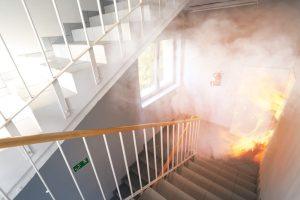
Fire doors are part of a building’s compartmentation strategy. They are there to help slow the spread of fire and smoke, giving people more time to escape and helping protect escape routes. But they only do that job when the door and surrounding parts are suitable, correctly fitted and looked after.
That is where certification becomes useful. It gives you a more structured way to talk about competence, installation records, inspection, maintenance and handover paperwork. It also makes it harder for the conversation to drift into vague phrases like “fire rated” without anyone checking what has actually been supplied or fitted.
Practical point:
Certification helps with contractor selection, but it does not replace the building owner’s wider duties. You still need the right specification, the right product, the right records and a maintenance plan that keeps the door working after installation.
What Our BM Trada Certification Covers
Installation and maintenance
Where we can help
We can support fire door installation and maintenance where the work falls within our BM Trada certification scope. If you are planning work across a commercial building, the simplest next step is to tell us what doors, locations and records you need to cover.
Check the detail
Do not assume every badge means the same thing
If a project file needs Q-Mark, FIRAS, IFC, UKAS registration, a registration number, an expiry date or another specific proof point, ask for that evidence before appointing any contractor. Similar-sounding scheme names are not automatically interchangeable.
Certification Is Helpful. It Is Not A Shortcut.
It is tempting to treat certification as a box-tick. In practice, it should start a better conversation. What is the required fire rating? Is the frame suitable? Are the ironmongery and seals compatible? What records will be handed over? Who checks the door later, after months of daily use?
The evidence trail should build up in layers
Certification scope
Check that the certificate covers the activity you need, not just fire doors in a general sense.
Door and opening
The rating, frame, ironmongery, seals, closer and wall construction still need to line up.
Handover record
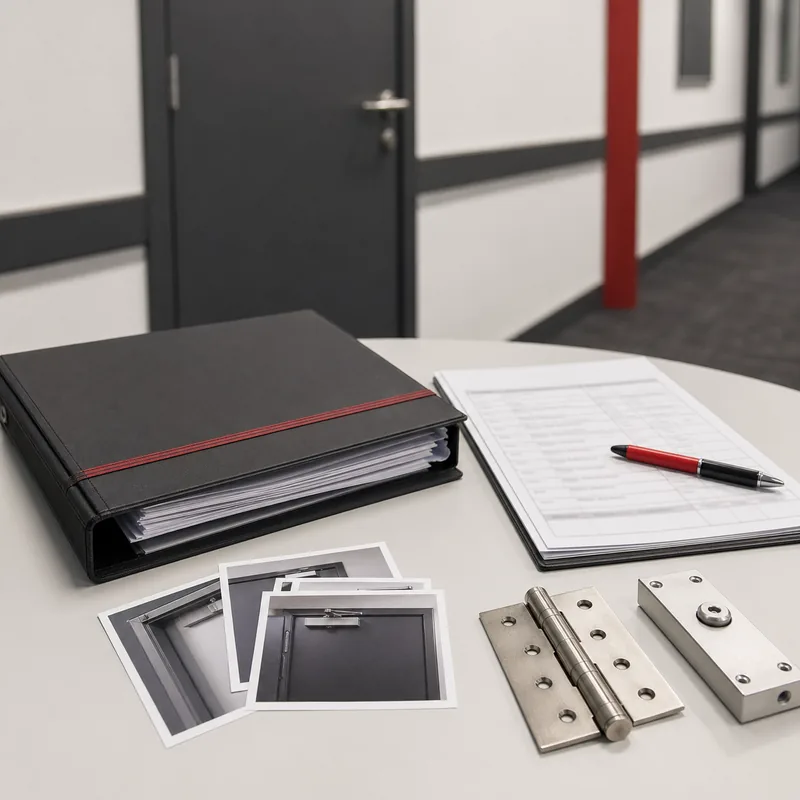
Ask what completion evidence, photos, labels or product details will be kept for the building file.
Maintenance plan
Fire doors get daily use. The record needs to stay current after the installation date.
A simple way to think about the risk trail
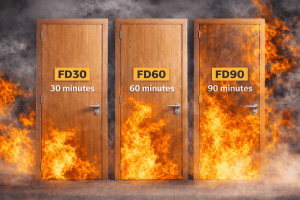
If you are still deciding which rating is needed, keep that decision separate from installer certification. Our guide to fire door ratings may help you frame the question before a project is specified.
Questions Worth Asking Before Fire Door Work Starts
A decent fire door conversation should be specific. If it stays vague, that is usually a warning sign. These are the kinds of questions facilities managers and building owners should be asking before installation or maintenance work is booked.
Certification and scope
- Are you certified for installation, maintenance, or both?
- Can you provide current evidence for this project?
- Does the planned work sit inside that scope?
- Who supervises the certified work?
Specification and compatibility
- What fire rating is required for this opening?
- Are the leaf, frame, glazing, hinges, seals and closer compatible?
- Will the work follow manufacturer instructions?
- Are the existing frames or walls unsuitable?
Installation and handover
- What checks happen before fitting starts?
- What completion records will be provided?
- How are gaps, seals, closers and hinges checked?
- Who keeps the records after completion?
Maintenance and control
- How often should these doors be checked?
- Which defects make a door unreliable?
- How should repairs be recorded?
- When is replacement better than repair?
For the handover side of the job, our guide on what to check after a fire-door installation is a useful follow-up.
How A Well-Run Fire Door Job Should Feel
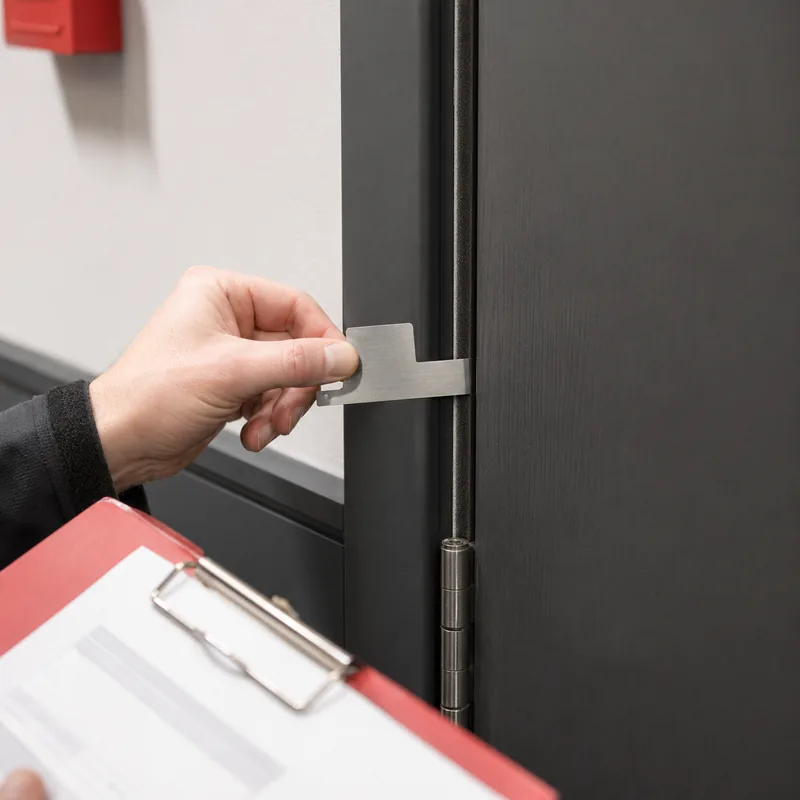
It should feel organised from the start. Not like a general joinery job where the fire door details are tidied up afterwards. Before anything is fitted, the contractor should understand the rating, the opening, the hardware, the records and the maintenance expectations.
Step 1
Check the evidence
Start by checking the contractor’s certification and whether it matches the job. For Original Fire, the relevant BM Trada statement covers fire door installation and maintenance.
Step 2
Confirm the requirement
Agree the rating, building use, compartment line, wall construction, opening and hardware needs.
Step 3
Install to method
The installation should protect the tested performance of the full fire door assembly, not just the door leaf.
Step 4
Keep the record
Agree product details, completion evidence, photographs, labels or certificates before work starts.
Step 5
Maintain the door
Fire doors are used every day. Maintenance keeps the paperwork aligned with the door’s real condition.
Red Flags When Reviewing Certification
Some certification wording is clear. Some is not. If a supplier’s answer stays vague after you ask for details, pause before you appoint them.
No current evidence available when requested.
The certificate does not state the activity covered.
A badge appears without any scope details.
Certification is presented as a guarantee of legal compliance.
One scheme is used to imply every passive fire activity is covered.
There is no clear handover record or maintenance expectation.
Fire Door Work Across Essex
Certification tends to matter most when the building has a proper audit trail to maintain. Landlords, managing agents, schools, healthcare settings, offices, industrial premises and multi-occupancy buildings often need more than a verbal assurance that the work has been done correctly.
We support fire door installation and maintenance across our Essex service area, including Basildon, Braintree, Chelmsford, Colchester, Southend-on-Sea and Harwich.
FAQ: BM Trada Fire Door Certification
Does BM Trada certification guarantee compliance?
No. It is a useful competence and quality-assurance signal, but compliance depends on specification, installation, records, maintenance and the wider fire safety context.
Does a certified installer mean the door itself is certified?
Not automatically. Installer certification and product certification are related but different. Check the door leaf or doorset evidence, compatible components, installation method and installer certification scope.
Is BM Trada the same as Q-Mark?
BM TRADA publishes fire door scheme information under its own certification services, and some official pages use Q-Mark naming. If a project needs a particular scheme or certificate detail, check the current evidence rather than assuming the names are interchangeable.
What paperwork should I ask for after installation?
Ask before work starts. Depending on the project, you may need completion evidence, product details, installation records, photographs, labels or certification documents. The records should be clear enough for the building file and future maintenance.
Should fire door maintenance also be certified?
If maintenance is part of the appointment, check whether the contractor’s certification scope covers maintenance. Fire doors can lose performance when they are damaged, altered or poorly maintained.
Can you help with certified fire door work?
Yes. We are certified under the BM Trada Third-Party Certification Scheme for Fire Door Installation and Maintenance and support fire door work across our Essex service area. Send us the building details and we can talk through the next step.
Next step
Use certification as the start of a proper project conversation
If you are checking certification before planning fire door work, we can help with installation and maintenance across our Essex service area. You can also check the BM Trada wording on our certification page before you get in touch.
Continue to the service page to review our fire door installation work, or speak to the team about the building, door locations and evidence you need for your records.